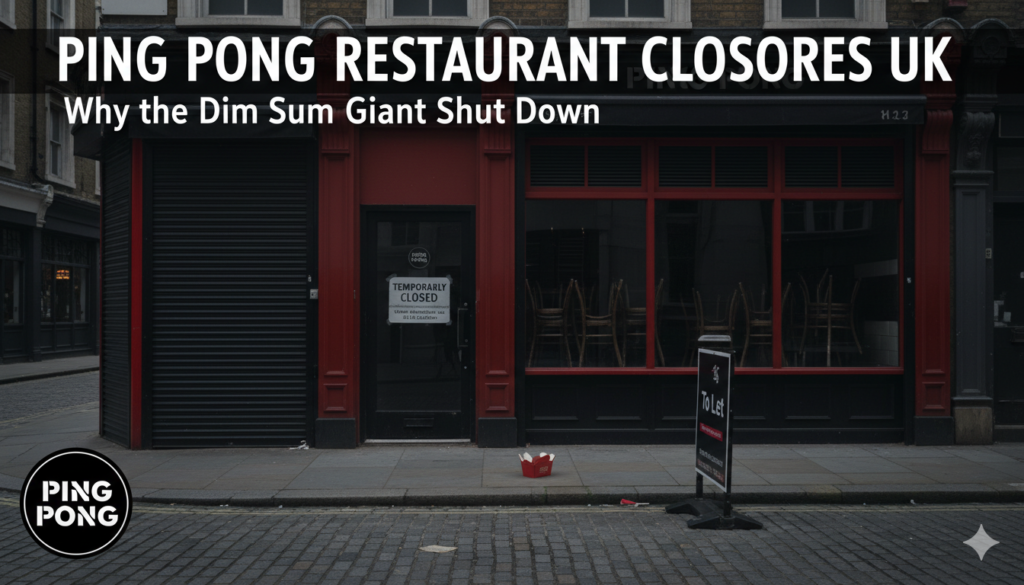

It feels like just yesterday we were all gathering around circular tables, steam rising from bamboo baskets filled with spicy chicken dumplings and honey-glazed ribs. For twenty years, Ping Pong was the go-to spot for Londoners who wanted a stylish, affordable dim sum experience. But as of July 2025, the steam has officially stopped. The news of the ping pong restaurant closures uk hit social media like a shockwave, leaving fans wondering how such a massive brand could vanish overnight.
I remember my first visit to their Soho branch. The dim lighting, the clever “tick-box” menus, and those iconic lychee martinis made it feel special. It wasn’t just a meal; it was a vibe. Seeing those “Permanently Closed” signs on the doors of their final four locations—Soho, Southbank, Bow Bells House, and St Christopher’s Place—is truly the end of an era for the UK high street.
Why Did Ping Pong Close All Its Locations?
When a big name like this disappears, it’s rarely just one thing. The ping pong restaurant closures uk were the result of a “perfect storm” of financial pressures. According to company reports, the business was hit by a massive £500,000 increase in annual costs just before the end. This came from a mix of higher business rates and the rising National Living Wage.
While the brand tried to stay afloat, they saw a sharp downturn in 2025. Revenues dropped by nearly 25% compared to the year before. Imagine trying to run a kitchen when you’re making a quarter less money than you used to, but your bills are higher than ever. It’s a recipe for disaster that even the best dim sum couldn’t fix.
The Infamous 15% Brand Charge Controversy
We can’t talk about the ping pong restaurant closures uk without mentioning the “Brand Charge.” In early 2024, Ping Pong made a bold move. They removed the traditional 12.5% service charge and replaced it with a 15% discretionary brand charge. The company claimed this would help pay staff a higher fixed wage, but it didn’t go down well with the public.
Many customers felt this was a sneaky way to bypass new laws that required 100% of tips to go to workers. The backlash on social media was intense. I saw many loyal diners saying they would boycott the chain. When people feel like their tips aren’t actually reaching the person serving their food, trust breaks down. That loss of trust played a huge role in the final days of the business.
A Timeline of Ping Pong’s Journey
To understand how we got to the ping pong restaurant closures uk, we have to look back at the numbers. The brand actually peaked years ago and had been quietly shrinking for a while.
Ping Pong Business Performance Table
| Year | Key Event | Financial Status |
| 2005 | First Soho restaurant opened | Rapid Growth |
| 2009 | Reached peak of 13 UK locations | Profitable |
| 2020 | Pandemic hits the UK | £1.4 Million Loss |
| 2022 | Pre-pack administration & sale | Small £334k Profit |
| 2024 | 15% “Brand Charge” introduced | PR Backlash |
| 2025 | All remaining sites closed | Ceased Trading |
The Impact of Post-Pandemic Debt
Like many of us, Ping Pong never fully recovered from the “COVID years.” The hospitality industry was hit harder than almost any other sector. Even after lockdowns ended, the ping pong restaurant closures uk were looming because of the massive debt built up during those quiet months.
The company had taken out loans to stay alive, but with interest rates rising and footfall in London remaining unpredictable, they were essentially running up a down escalator. By the time 2025 arrived, the weight of that debt, combined with unpaid rent obligations, became too much to carry.
Rising Costs of the UK High Street
Running a restaurant in central London is incredibly expensive. The ping pong restaurant closures uk highlight a bigger problem for the UK dining scene. Rent in areas like Soho and Southbank is sky-high. When you add the “triple threat” of soaring energy bills, expensive food imports, and higher taxes, the profit margins become razor-thin.
I’ve spoken to other restaurant owners who say they are paying double for electricity compared to three years ago. For a brand like Ping Pong, which relied on large, high-spec venues, these overheads were simply unsustainable in the long run.
What Happened to the Staff?
One of the saddest parts of the ping pong restaurant closures uk is the human cost. About 125 people lost their jobs when the final four sites shuttered. Because the closure happened so suddenly, many workers were left with unpaid wages and holiday pay.
Reports show that the company owed over £125,000 to its employees at the time of the collapse. While some may be able to claim this back through government schemes, it’s a stressful situation for the hardworking chefs and servers who kept the “steam going” for two decades.
Changing Habits: Did We Stop Eating Out?
It’s not just about the money; it’s about how we live now. The ping pong restaurant closures uk reflect a shift in how people spend their Friday nights. With the rise of high-quality delivery apps and the “cost of living crisis,” many people have swapped a £60 dim sum dinner for a cheaper night in.
Ping Pong was a “mid-market” brand—not quite fast food, but not fine dining. This middle ground is currently the hardest place to be in the UK. People are either saving money by eating at home or splurging on a truly high-end experience once a month.
The Role of Administration and Restructuring
Before the final ping pong restaurant closures uk, the brand tried to save itself. In late 2022, they went through a “pre-pack administration.” This is a legal process where a company sells its assets to a new owner (often the same directors) to shed debt and keep trading.
For a while, it looked like it might work. They posted a tiny profit in 2022, but the “new” company still faced the same old problems: high rent and low footfall. Sometimes, a fresh coat of paint isn’t enough to fix a crumbling foundation.
Is There a Future for Ping Pong?
Is this truly the end, or could we see a comeback? While the physical ping pong restaurant closures uk seem permanent, the brand name still holds value. We might see Ping Pong reappear as a “dark kitchen” brand for delivery only, or perhaps as a range of frozen dumplings in supermarkets.
In their farewell message, the directors said, “It’s a wrap.” But in the world of business, “never say never.” However, for now, if you’re craving those translucent shrimp dumplings, you’ll have to look elsewhere in Chinatown.
Frequently Asked Questions
1. Are all Ping Pong restaurants closed in the UK?
Yes, as of July 2025, all remaining Ping Pong locations in London have officially ceased trading and are permanently closed.
2. Why did Ping Pong close so suddenly?
A combination of rising operating costs (up by £500k), a 25% drop in revenue, and high post-pandemic debt made the business unviable.
3. What was the “Brand Charge” controversy?
Ping Pong replaced their service charge with a 15% “brand fee” that didn’t go directly to staff, leading to a public backlash and boycotts.
4. How many jobs were lost in the closure?
Approximately 125 employees were made redundant when the final four sites in London shut down.
5. Can I still order Ping Pong food online?
Currently, the brand has ceased all operations, including delivery services from their main restaurants.
6. Who founded Ping Pong?
The chain was founded in 2005 by Kurt Zdesar, though he left the company in 2007 to pursue other ventures like Chotto Matte.
Conclusion: Lessons from the Steam
The ping pong restaurant closures uk serve as a wake-up call for the entire hospitality industry. It shows that even a beloved 20-year-old brand isn’t safe if it can’t balance the books or keep the trust of its customers. While we’ll miss the bottomless brunches and the lively atmosphere, the story of Ping Pong reminds us to support our favorite local spots while they’re still here.