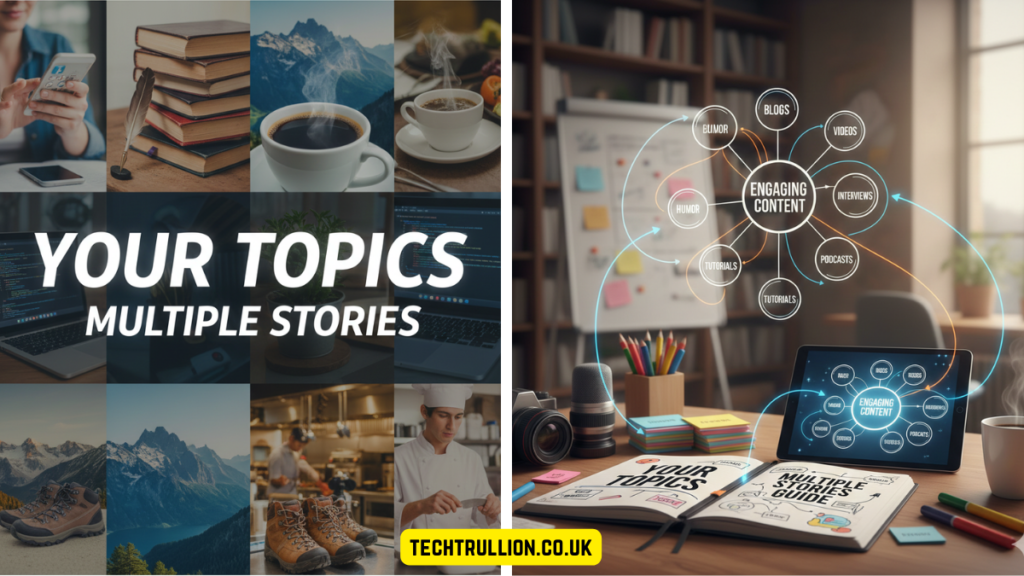

In today’s fast-paced world, capturing attention isn’t easy. Readers scroll endlessly, algorithms prioritize engagement, and content creators are constantly searching for ways to make their work stand out. One approach I’ve found particularly effective is Your Topics | Multiple Stories. It’s a method that isn’t just about writing multiple pieces on a single topic—it’s about exploring one idea from different angles, creating depth and resonance in ways a single narrative can rarely achieve.
Whether you’re a writer, a marketer, or even a teacher, understanding this concept can transform the way you approach content creation. Let’s dive in.
What Are “Your Topics | Multiple Stories”?
At its core, Your Topics | Multiple Stories is the practice of taking a central idea and exploring it through various perspectives. Think of it like looking at a diamond: a single facet sparkles, but rotate it, and you notice entirely new reflections. Similarly, a story told from multiple viewpoints can reveal layers of insight that a one-dimensional approach misses.
For instance, imagine writing about climate change. Instead of one article on statistics, you could explore a farmer’s struggle, a scientist’s research, a policymaker’s dilemma, and a child’s perspective. Each story connects back to the same core topic but engages readers differently.
Why Multiple Stories Work Better Than Single Narratives
I’ve tested both approaches over the years, and the difference is striking. Here’s why Your Topics | Multiple Stories works so well:
1. It Builds Empathy
Humans connect with people, not abstract ideas. By showing a topic through multiple lenses, readers start to feel the experiences behind the facts. For example, if you write about urban development, including voices from residents, developers, and city planners gives readers a sense of real-world impact.
2. It Keeps Readers Engaged
A single perspective can feel repetitive or flat. Layering stories creates movement, tension, and curiosity. Readers might finish one story thinking, “I wonder how this affects someone else?” That curiosity naturally leads them to explore the next story you’ve crafted.
3. It Improves Retention
When people hear an idea multiple times in different contexts, they remember it better. I once wrote about sustainable fashion from three angles: designer, consumer, and environmentalist. By the end, readers had a more complete picture—and engagement metrics were noticeably higher than my single-angle posts.
How to Implement Your Topics | Multiple Stories
Putting this into practice is easier than it sounds, but it does require planning. Here’s a step-by-step approach I use:
Step 1: Identify the Core Theme
Start with your central idea. Keep it simple—don’t try to cover everything at once. For example, if your topic is “remote work,” that’s your anchor. Everything else will branch from it.
Step 2: Decide the Perspectives
Next, choose whose voices or experiences you’ll highlight. A business topic might include perspectives from CEOs, employees, clients, and industry experts. For lifestyle content, you could look at personal experiences, historical context, trends, and practical advice. The key is variety.
Step 3: Plan Your Story Structures
You can tell multiple stories in different ways. Some options include:
- Parallel narratives: Two or more stories running side by side.
- Sequential stories: One perspective leads to another, building understanding.
- Intersecting plots: Separate narratives that overlap at key points.
I once tried parallel narratives for a travel piece—following two friends exploring the same city differently. The contrast added humor, insight, and relatability.
Step 4: Adapt for Platforms
Not every story fits every platform. A newsletter might focus on one angle with links to the others, while social media snippets can highlight quotes from multiple perspectives. Even in a single blog post, you can clearly signal shifts in viewpoint to keep readers oriented.
Real-Life Examples of Multiple Stories
To make this more concrete, here are some examples of Your Topics | Multiple Stories in action:
- Education: A lesson on historical events can include soldiers’ diaries, civilians’ letters, and newspaper excerpts from the time. Students often remember these stories better than dry facts.
- Marketing: A product review series could cover the perspectives of the engineer, the designer, and the end-user. This gives the audience a well-rounded view without feeling like a hard sell.
- Health & Wellness: A guide on mental health might combine clinical advice, personal experiences, and cultural viewpoints to create a more empathetic understanding.
Each example demonstrates that when multiple stories connect to a central topic, the audience gains both knowledge and emotional engagement.
Common Challenges and How to Overcome Them
While powerful, Your Topics | Multiple Stories isn’t without pitfalls. Here are a few I’ve encountered:
1. Losing the Core Idea
With multiple perspectives, it’s easy to drift. Always remind yourself what the main topic is, and ensure every story ties back. Out-of-focus narratives confuse readers rather than enrich them.
2. Overcomplicating the Story
Too many perspectives can overwhelm. In my experience, 2–4 angles per topic usually work best. You want depth, not chaos.
3. Balancing Voice and Tone
Different stories may naturally have different voices. That’s fine, but make sure the transitions are smooth and the overall tone feels consistent. Readers notice jarring shifts, and it can pull them out of the story.
Tips for Making Multiple Stories Work Seamlessly
- Use clear subheadings: Signal whose perspective the reader is experiencing.
- Include connective commentary: Brief transitions between stories help maintain flow.
- Mix story types: Combine personal anecdotes, expert opinions, and factual reporting for richer texture.
- Test with your audience: Engagement metrics, comments, and feedback often reveal which angles resonate most.
I often ask a few colleagues to read drafts before publishing. Their input can highlight where perspectives are unclear or where stories feel redundant.
Why Writers and Marketers Should Embrace This Approach
Writers, bloggers, and marketers are all competing for attention. A single story can get lost in the noise. Your Topics | Multiple Stories offers a way to stand out by:
- Making your content feel layered and thoughtful.
- Allowing readers to choose the perspective they relate to most.
- Encouraging deeper discussion and sharing, since multiple angles often spark debate and curiosity.
Personally, this method has transformed how I write newsletters. Subscribers often comment on feeling “seen” because at least one story resonates with their experience.
FAQs About Your Topics | Multiple Stories
1. Can this method work for any topic?
Yes, almost any topic can benefit from multiple perspectives. The key is finding angles that genuinely add value to your audience.
2. How many stories should I include?
Typically 2–4 perspectives work best. Too few feels flat; too many can confuse readers.
3. Is this approach only for written content?
Not at all. It works for videos, podcasts, social media threads, and even presentations. The principle is the same: one core topic, multiple angles.
4. How do I keep the narrative cohesive?
Use subheadings, transitional sentences, and consistent tone. Always tie each story back to the main topic.
5. Can beginners use this method effectively?
Absolutely. Start small—pick one topic, write two different perspectives, and see how it flows. Practice makes this approach more natural over time.
Conclusion
Your Topics | Multiple Stories isn’t just a writing technique—it’s a mindset. By exploring a topic through multiple lenses, you deepen understanding, connect emotionally, and create content that sticks. It takes a bit of planning and a willingness to see things from different angles, but the payoff is substantial. Whether you’re crafting a blog post, marketing content, or an educational lesson, multiple stories can transform ordinary ideas into rich, engaging narratives that readers remember.