
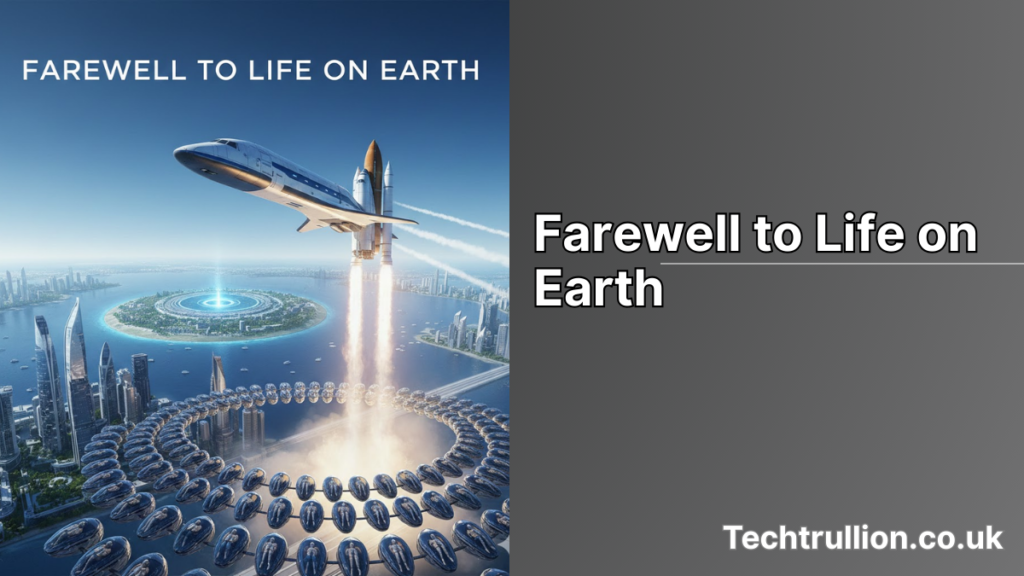

The thought of a farewell to life on Earth might feel distant, even abstract. Yet, it’s something that has fascinated humans for centuries—whether through science, spirituality, or just plain curiosity. From the cosmic fate of our planet to personal reflections on mortality, this topic forces us to pause and consider our place in the universe. In this article, we’ll explore the scientific realities, climate concerns, and spiritual insights behind what it truly means to say goodbye to life on Earth.
Understanding the Cosmic Perspective
When scientists talk about the eventual end of life on Earth, they aren’t talking about next year—or even the next century. The Sun, which sustains all life on our planet, will gradually change over billions of years. Its luminosity is slowly increasing, and in roughly a billion years, Earth will face conditions that no living organism can survive.
Surface temperatures will rise, oceans will evaporate, and the atmosphere will turn hostile. Eventually, the Sun will expand into a red giant, possibly engulfing our planet entirely. It’s a stark reminder that life on Earth is temporary—not just in human terms, but in cosmic ones. For many, these scientific projections spark awe more than fear, highlighting the delicate balance that sustains life right now.
Climate Change: A Modern Farewell
On a much shorter, human-scale timeline, climate change presents its own kind of farewell to life on Earth. Rising temperatures, unpredictable weather, and extreme natural events are already reshaping communities and ecosystems.
Take, for example, small coastal towns I’ve visited that are slowly being swallowed by rising seas. Families there talk about leaving ancestral homes, moving inland, and witnessing the subtle but relentless transformation of their surroundings. It’s a very tangible, personal farewell—one that blends science with emotion.
Unlike cosmic predictions, climate change is something we can see, measure, and perhaps influence. It reminds us that while Earth may have billions of years left, the conditions for comfortable human life are far more fragile and urgent.
Spiritual and Philosophical Reflections
Beyond science and climate, saying farewell to life on Earth also resonates on a spiritual and philosophical level. Many religions view death and impermanence as natural stages in existence. In Islam, for instance, the concept of passing from this life to the next carries a focus on faith, responsibility, and legacy. Christian traditions often speak about life after death as a reunion with the divine, encouraging reflection and gratitude for the time spent here.
Even outside formal religion, people write letters, create art, or record memories as ways to honor life and say goodbye. These acts are a form of mindfulness, a recognition that every living moment carries significance. I remember reading a collection of letters from individuals preparing for end-of-life care; each one was unique, poignant, and deeply human. That’s the kind of farewell that goes beyond science—it’s personal.
Life Lessons from Past Extinctions
Earth has seen mass extinctions before, events that wiped out significant portions of life in geological history. From the Permian extinction to the dinosaurs’ demise, these episodes are stark reminders of the planet’s fragility. They also teach resilience—life evolves, adapts, and sometimes reemerges in entirely new forms.
Studying fossils and historical climate patterns, I’ve often been struck by how adaptable nature is, even under extreme stress. While a farewell to life on Earth may feel permanent for us as individuals, the planet itself continues to change and renew. It’s both humbling and strangely comforting.
Personal Reflections and Emotional Farewell
Thinking about a farewell to life on Earth naturally invites personal reflection. What legacy will we leave? How do we want to remember our time here? Simple actions, like planting a tree, documenting family stories, or engaging in community projects, become meaningful gestures when seen through this lens.
I’ve spoken with people who’ve written “goodbye” letters to nature—notes expressing gratitude to the planet for the air, water, and beauty it has provided. These small acts may seem symbolic, but they create a connection between human experience and the broader planetary story. They remind us that even fleeting lives can touch something timeless.
Technology and Preparing for the Future
In our era, technology also shapes how we confront this farewell. Scientists model climate scenarios, astronomers track near-Earth objects, and environmental organizations propose sustainable strategies for living with less impact. Tools like AI and satellite data help us predict changes and plan accordingly.
Yet, technology is only part of the equation. Emotional preparation, spiritual acceptance, and ethical consideration matter just as much. One cannot simply “engineer” away mortality or planetary change; a holistic approach is needed—one that blends understanding, compassion, and foresight.
Finding Meaning in the End
Ultimately, a farewell to life on Earth is more than doom and gloom. It’s an invitation to live more consciously, to value relationships, and to care for the environment. Recognizing impermanence can inspire generosity, mindfulness, and creativity.
Whether you’re thinking in billions of years or just the next few decades, there’s wisdom in considering how fragile life really is. From cosmic timelines to everyday human experience, every farewell carries lessons worth reflecting on.
FAQs
1. When will life on Earth end according to science?
Life as we know it will face extreme challenges in roughly a billion years, mostly due to the Sun’s evolution and increasing heat.
2. Can climate change cause a complete end to life?
Not immediately, but unchecked climate change can make regions uninhabitable, disrupt ecosystems, and create long-term survival challenges for humans and animals.
3. How do spiritual traditions view the end of life on Earth?
Many see it as a transition rather than an end, emphasizing legacy, faith, and mindful living. Different traditions offer unique insights and rituals.
4. Are past extinctions relevant to our current life on Earth?
Yes. Studying them provides lessons about resilience, adaptation, and the consequences of environmental stressors. It helps us understand risks and plan responsibly.
5. How can individuals emotionally cope with the concept of Earth’s impermanence?
Engaging in reflection, community work, nature conservation, and creative expression helps people find meaning and peace, turning awareness into action rather than fear.
Conclusion
A farewell to life on Earth is a multifaceted concept, blending science, climate realities, spirituality, and personal reflection. It reminds us that life is precious, time is finite, and our actions leave footprints—some small, some lasting. While the cosmos will eventually change, and human impact alters our present, the awareness of impermanence can inspire a deeper connection to the world and those around us.


