
Net worth is a simple idea, but many people feel confused by it.
In easy words, net worth shows what a person truly owns after paying all debts.
It is not just about salary or cash. It includes homes, savings, cars, and even loans.
When people talk about net worth, they are trying to understand financial health.
A high income does not always mean a high net worth.
Some people earn more but spend even more.
This guide explains net worth in a friendly and simple way.
You will learn how net worth works, why it matters, and how people grow it over time.
Everything here is written so even a child can understand.
What Net Worth Really Means
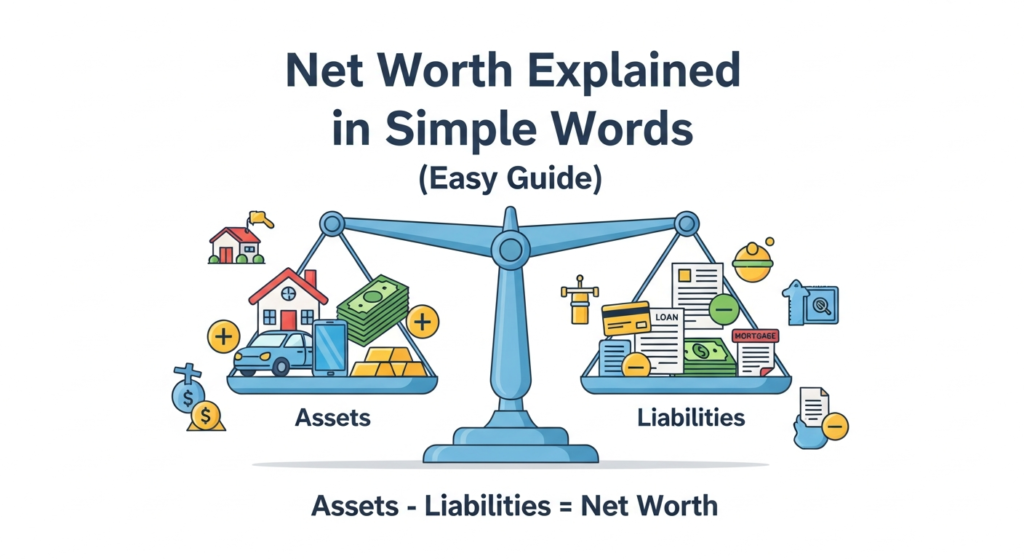
Net worth means the total value of what you own minus what you owe.
Think of it like cleaning your room and counting your toys.
Then subtract the toys you promised to give back.
Assets are things you own.
Liabilities are things you owe.
When assets are bigger than liabilities, net worth is positive.
If debts are bigger, net worth becomes negative.
People often use net worth to measure success, but it is more than that.
It shows how stable your money life really is.
That is why net worth matters at every age.
How Net Worth Is Calculated Step by Step
Calculating net worth is easy and does not need math skills.
First, list everything you own.
This includes cash, property, savings, and investments.
Next, list everything you owe.
This includes loans, credit cards, and unpaid bills.
Now subtract total debts from total assets.
The final number is your net worth.
This simple formula helps people understand where they stand.
It also helps plan better financial decisions.
That is why experts always track net worth regularly.
Assets That Increase Net Worth
Assets are the good side of net worth.
They add value and help build wealth over time.
Common assets include homes, land, cars, and savings.
Investments like stocks and businesses also count as assets.
Even small savings matter.
Over time, they grow and increase net worth slowly.
This is how many wealthy people start their journey.
Assets do not need to be expensive.
They just need to grow or hold value.
Liabilities That Reduce Net Worth
Liabilities are debts that lower net worth.
They take value away instead of adding it.
Loans, credit cards, and unpaid bills are liabilities.
High-interest debt is especially harmful.
Many people ignore small debts, but they add up fast.
Reducing liabilities is one of the fastest ways to improve net worth.
Smart people focus on paying debt early.
This creates financial peace and stability.
Why Net Worth Is More Important Than Income
Income shows how much money you earn.
Net worth shows how much you keep.
Some people earn a lot but save nothing.
Others earn less but build strong net worth.
That is why net worth gives a clearer picture of success.
It shows habits, discipline, and planning.
Over time, net worth grows when spending is controlled.
This matters more than salary alone.
Net Worth at Different Life Stages
Net worth changes with age and life events.
Young people often start with low or negative net worth.
Middle-aged people usually grow net worth slowly.
They invest, save, and reduce debts.
Older adults often reach peak net worth.
They own assets and have fewer liabilities.
Every stage is normal.
The goal is steady improvement, not perfection.
How Celebrities and Public Figures Build Net Worth
Famous people grow net worth using many income sources.
They earn from salaries, brands, and investments.
Movies, sports, and businesses add to net worth.
Smart investing protects wealth long-term.
Many celebrities lose money due to poor planning.
That shows net worth needs management, not fame.
Real success comes from smart choices, not just popularity.
Common Myths About Net Worth
Many people believe net worth means being rich.
That is not true.
Net worth is about balance, not luxury.
You can live simply and still have strong net worth.
Another myth is that net worth is fixed.
In reality, it changes often.
Learning the truth helps people make better money choices.
How to Improve Net Worth Over Time
Improving net worth takes patience.
Small steps make big changes.
Saving regularly is the first step.
Reducing debt comes next.
Smart investing helps net worth grow faster.
Avoid unnecessary spending.
Consistency is more important than speed.
FAQs About Net Worth
1. What is net worth in simple words?
Net worth means what you own after subtracting what you owe.
2. Is net worth the same as income?
No, income is earnings, net worth is total financial value.
3. Can net worth be negative?
Yes, if debts are higher than assets.
4. Why do people track net worth?
It helps measure financial progress and stability.
5. Does age affect net worth?
Yes, net worth usually grows with time and planning.
6. How often should net worth be checked?
Once or twice a year is enough for most people.
Final Thoughts on Net Worth
Net worth is not about showing off wealth.
It is about understanding your financial position.
Tracking net worth builds awareness and confidence.
It helps people plan smarter and stress less.
No matter your age or income, net worth can improve.
Start small, stay consistent, and think long-term.
If you found this guide helpful, share it with others.
Learning about net worth is the first step toward financial freedom.