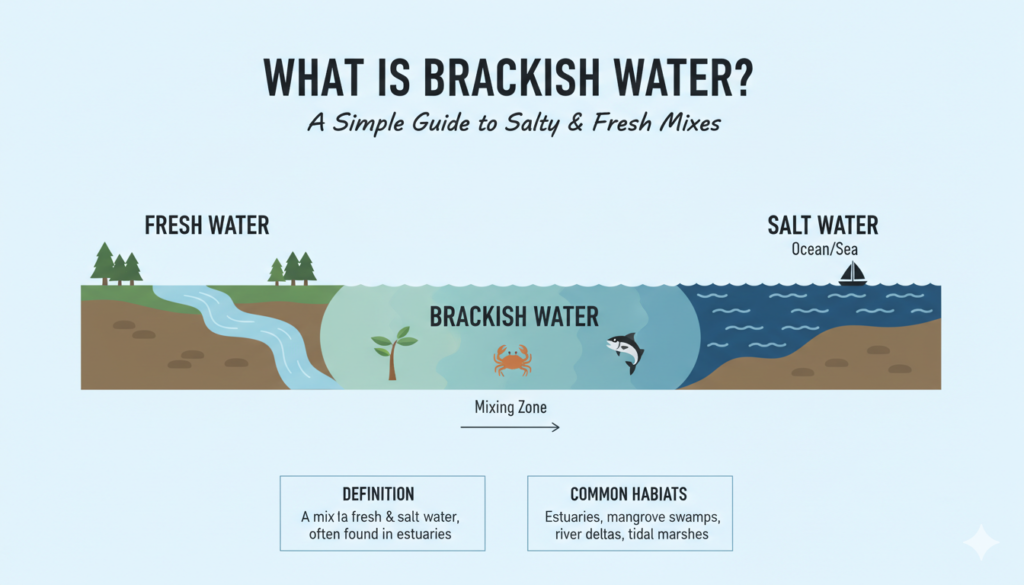

Have you ever wondered what happens when a salty ocean meets a fresh river? They don’t just stay separate like oil and water. Instead, they mix together to create something very special called brackish water. This type of water is saltier than the water you drink from your tap, but it is not nearly as salty as the ocean. Think of it like a “middle ground” for hydration. It usually forms in places like coastal marshes or where big rivers flow into the sea.
Brackish water is a huge part of our planet’s ecosystem. It acts as a bridge between two different worlds. Because it has a unique salt level, it allows specific plants and animals to thrive in ways they couldn’t anywhere else. Many people think water is either “fresh” or “salty,” but the world is much more colorful than that. Understanding this “in-between” water helps us see how nature stays in balance. It is truly one of nature’s most interesting mixtures, and it plays a vital role in protecting our coastlines and providing homes for many creatures.
Comparing Different Types of Water
To understand brackish water, it helps to look at how much salt is in the water. Scientists measure this using “salinity.” While fresh water has almost no salt, and the ocean is very salty, this mix sits right in the center. It is important to know these differences because the salt level dictates what can live there. For example, a gold fish from a pond wouldn’t last long in the salty mix, and a deep-sea shark would feel very out of place too.
| Water Type | Salt Level (Salinity) | Common Locations |
| Fresh Water | Very Low (0.5 ppt) | Lakes, Rivers, Ponds |
| Brackish Water | Medium (0.5 – 30 ppt) | Estuaries, Mangrove Swamps |
| Saline Water | High (30 – 50 ppt) | Oceans, Seas |
| Brine | Extremely High (50+ ppt) | Salt Lakes, Dead Sea |
Where Do We Find Brackish Water?
You can find brackish water in many places around the world, especially near the coast. The most common place is called an estuary. This is a wide area where a river’s mouth meets the open sea. As the tide comes in, salty ocean water pushes up into the river. When the tide goes out, fresh water flows back down. This constant “push and pull” keeps the water perfectly mixed. It is a busy place where the environment changes every few hours.
Another famous spot for brackish water is a mangrove forest. These are magical-looking forests where trees grow right out of the water. Their roots are underwater and act as a filter. You might also find this water in coastal lagoons or salt marshes. In some parts of the world, even underground wells can have brackish water if sea water leaks into the soil. It is more common than you might think, and it covers a large portion of our shorelines globally.
Why Does Salinity Change?
The saltiness of brackish water is not always the same. It can change depending on the weather or the time of year. For instance, if it rains a lot, the extra fresh water will make the area less salty. However, during a hot summer with no rain, the water evaporates. This leaves more salt behind, making the water much saltier. I once visited a marsh after a big storm, and the water felt almost like a regular lake because of all the rain!
Tides also play a big role in the makeup of brackish water. Every day, the ocean brings in a fresh supply of salt. When the tide is high, the salinity goes up. When the tide is low, the fresh river water takes over. This means the animals living there have to be very tough. They must handle watery changes that would be difficult for other creatures. This constant shifting is what makes these areas so unique and full of life.
The Amazing Animals of the Estuary
Because brackish water is so unique, it is home to some of the coolest animals on Earth. You will find creatures like blue crabs, oysters, and shrimp. These animals love the “in-between” salt levels. Many fish also use these areas as a “nursery.” They lay their eggs here because the thick plants and murky water provide a safe place for babies to grow. Without these spots, many ocean fish would struggle to survive.
One of my favorite examples of a brackish water resident is the Diamondback Terrapin. It is a turtle that lives its whole life in these marshes. It has special glands to help it get rid of extra salt. Bull sharks are also famous for swimming into these areas. They are one of the few sharks that can handle both salty and fresh mixes. It is like a busy neighborhood where everyone has a special skill to survive the changing salt levels.
Plants That Love the Salt Mix
Most plants would die if you poured salt on them, but brackish water plants are different. Mangrove trees are the kings of this environment. They have special roots that can actually filter out the salt, allowing the tree to drink the fresh part. Some mangroves even “sweat” the salt out through their leaves! If you ever touch a mangrove leaf, it might feel a bit crunchy or salty because of this amazing trick.
Other plants, like cordgrass, help hold the mud together in brackish water areas. These plants are very important because they stop the land from washing away during storms. They act like a giant sponge that soaks up big waves. By living in this salty mix, these plants provide a home for birds and small bugs. They are the foundation of the entire coastal ecosystem. Without these salt-tolerant plants, our beaches would look very different and much emptier.
Is Brackish Water Safe to Drink?
A common question people ask is if humans can drink brackish water. The short answer is no. While it has less salt than the ocean, it still has too much for our bodies to handle. If you drank it, the salt would actually make you thirstier! However, scientists have found ways to make it safe. They use a process called desalination. This involves using big filters to take the salt out so people can use it for drinking or farming.
In many dry parts of the world, brackish water is a hidden treasure. Since it is easier to clean than ocean water, it is a great backup source for fresh water. Many cities are now building plants to turn this salty mix into clean water for homes. It takes some work and energy, but it is a very helpful tool for the future. Just remember, if you see it in nature, keep it for the fish and stick to your water bottle!
How Brackish Water Protects Our Homes
You might not realize it, but brackish water environments protect where we live. Marshes and estuaries act as a “buffer zone” during hurricanes or big storms. When a giant wave hits the coast, the thick plants in these areas slow the water down. This prevents flooding in nearby towns and cities. It is like nature’s own security system. By keeping these areas healthy, we are actually keeping our own homes safer from the sea.
In addition to stopping waves, brackish water areas act as a giant filter for the planet. As water flows from the land into the sea, it often carries dirt or pollution. The plants in these marshes trap the dirt and clean the water before it reaches the ocean. This keeps the coral reefs and deep-sea habitats much cleaner. It is a natural cleaning service that works 24 hours a day for free! We owe a lot to these muddy, salty spaces.
The Importance of Saving These Areas
Sadly, many brackish water habitats are in trouble. People sometimes want to build houses or hotels right on the water. When we pave over marshes, we lose the protection and the wildlife they provide. Also, pollution from factories can hurt the delicate balance of salt and fresh water. If the water gets too dirty, the oysters and fish cannot survive. This is why many groups are working hard to protect our coasts.
Protecting brackish water is something we can all help with. By reducing plastic waste and supporting coastal conservation, we keep these “middle ground” waters healthy. Even learning about them is a great first step! When we understand how important the mix of salt and fresh water is, we are more likely to take care of it. These areas are not just “swamps”; they are vibrant, living systems that help the entire world stay healthy and balanced.
Fun Facts About the Salty Mix
Did you know that some of the world’s largest bodies of water are actually brackish water? The Baltic Sea, located in Europe, is the largest area of this water type in the world. Because it is surrounded by so much land and has many rivers flowing into it, it stays perfectly mixed. Another famous example is the Caspian Sea. Even though it is called a “sea,” its salt level is much lower than the ocean. It is a giant playground for unique species.
Another fun fact is that brackish water can sometimes look different colors. Depending on the mud and the types of tiny plants (called algae) living in it, the water can look green, brown, or even red. It might not look as clear as a swimming pool, but that “murkiness” is actually a sign of health! It means the water is full of nutrients and food for all the animals living there. It is a soup of life that supports millions of creatures every single day.
Conclusion: A Vital Part of Our World
In the end, brackish water is much more than just a simple mixture. It is a bridge between the land and the deep sea. It provides a home for amazing animals, grows unique plants that “sweat” salt, and even protects our homes from big storms. While we cannot drink it ourselves without special tools, we rely on it for a healthy planet. From the tiny shrimp to the massive mangrove trees, everything in this environment works together in a beautiful, salty harmony.
Next time you are at the beach or near a river mouth, take a look at the water. You might be standing right next to a brackish water wonder! It is a reminder that nature loves to mix things up. By valuing these special places, we ensure that the “nursery of the sea” stays open for business for a long time to come. It’s a small part of the big water cycle, but it makes a huge difference in the world we share.
Frequently Asked Questions
1. Can fish from a freshwater tank live in brackish water?
Most freshwater fish cannot survive in this mix. Their bodies are built for water with no salt. However, some “hardy” fish can adapt if the salt level is very low. It is always best to keep them in the water they are used to.
2. Is the Chesapeake Bay brackish?
Yes! The Chesapeake Bay is one of the most famous examples of a brackish water estuary in the United States. It mixes fresh water from many rivers with salty water from the Atlantic Ocean.
3. Are all swamps made of brackish water?
Not all of them. Some swamps are entirely fresh water, while others (like mangrove swamps) are brackish. It usually depends on how close the swamp is to the ocean.
4. Can you swim in brackish water?
Yes, you can swim in it! It feels very similar to swimming in the ocean, though it might be a bit more “buoyant” than a lake. Just be careful of the local wildlife and always follow local safety signs.
5. Why do oysters love this water so much?
Oysters thrive in brackish water because it provides the perfect amount of salt for them to grow their shells. It also contains plenty of tiny food particles that the oysters filter out of the water to eat.