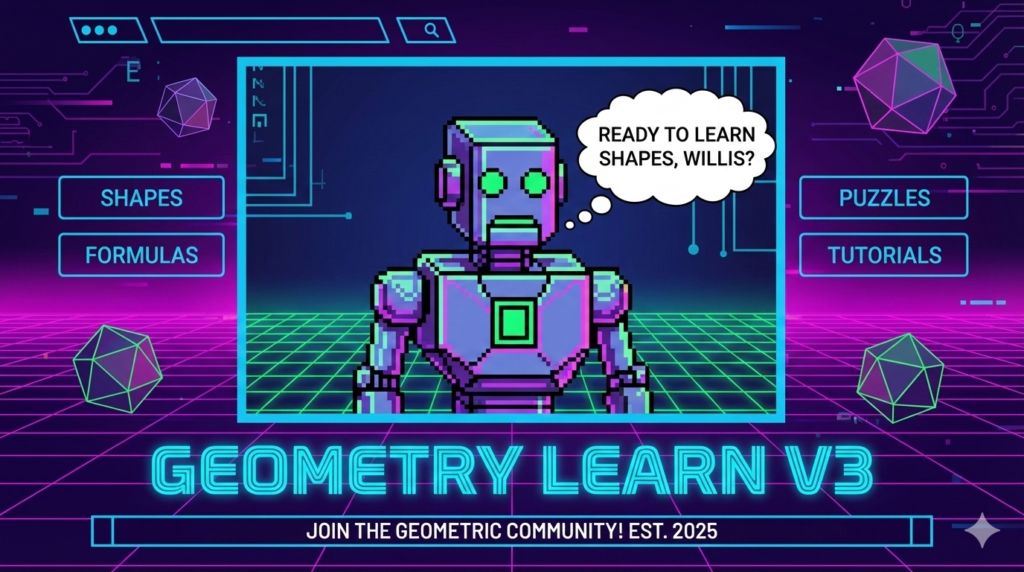

Learning geometry has always been one of those subjects that can feel a little intimidating. I remember in school staring at triangles and circles, wondering why I needed to know how to calculate their angles. But over time, I found tools that made it not just understandable but actually enjoyable. One of the tools I’ve spent time exploring recently is geometry learn v3. It’s a platform that combines interactive games and practical resources to help students and enthusiasts grasp geometric concepts more effectively.
In this article, I want to walk you through my experience, explain how it works, and give you practical insights into why it might actually help make geometry a bit more fun.
What Is Geometry Learn V3?
At its core, geometry learn v3 is an educational platform designed to make learning geometry more interactive and engaging. Instead of just reading formulas in a textbook, you’re actively participating in games, challenges, and exercises that help reinforce the concepts.
Think of it as a blend of learning and gaming. You’re not just memorizing; you’re applying. And that application makes a huge difference because geometry is all about relationships between shapes, angles, and measurements.
From my perspective, what sets this platform apart is how it’s structured. Each module introduces concepts gradually, often starting with basic shapes and slowly moving into more complex areas like triangle theorems or coordinate geometry.
How Interactive Games Change the Way We Learn
One of the first things you’ll notice with geometry learn v3 is the game-based approach. For example, one activity might have you rotate a shape to fit into a puzzle correctly, helping you understand angles and symmetry without even realizing you’re “studying.”
I remember playing a game that involved forming triangles with specific angle measures. At first, it felt like just a puzzle, but after a few rounds, I was naturally remembering the triangle sum theorem without thinking about memorizing it. That’s the kind of subtle learning this platform encourages.
Interactive games like these are particularly helpful because they give instant feedback. If you make a mistake, you can immediately see why and try again. Traditional textbooks don’t provide that immediate correction, which can slow down understanding.
Key Features That Make Learning Geometry Easier
Geometry learn v3 is packed with features designed for clarity and accessibility:
1. Step-by-Step Tutorials
Each concept comes with a small, digestible explanation. Instead of overwhelming pages of theory, it provides short lessons with diagrams that make sense.
2. Practice Quizzes
After learning a concept, you can immediately test yourself with quizzes. These are interactive and often use drag-and-drop or matching exercises to make the learning active.
3. Real-Life Examples
One thing I liked is that the platform tries to relate geometry to real life. For instance, understanding angles in construction or symmetry in art makes the subject feel less abstract.
4. Progress Tracking
You can see which areas you’ve mastered and which need more attention. For students, this is great because it personalizes the learning experience.
Why Geometry Learn V3 Works Better Than Traditional Methods
I’ve spent plenty of time trying to learn geometry from standard textbooks, and while they are thorough, they often feel dry. What geometry learn v3 does differently is make the learning active.
When you physically manipulate shapes or solve interactive problems, your brain processes the information differently. You’re not just memorizing formulas—you’re understanding them.
Another reason it works is the pacing. The platform allows you to progress at your own speed. You can spend more time on tricky topics without feeling rushed. Conversely, if you grasp a concept quickly, you can move forward without waiting for the next class or chapter.
Real-Life Example: Applying Geometry With Games
Here’s a practical example from my experience. One module focused on triangles and their properties. The game challenged me to adjust the sides of a triangle to meet specific criteria. I had to consider angles and lengths carefully.
At first, I struggled. I kept making mistakes. But after a few rounds, I started seeing patterns. Suddenly, it wasn’t a set of abstract rules; it was something I could visualize and predict. That moment—when theory clicks in a tangible way—is why tools like geometry learn v3 are so effective.
Tips to Get the Most Out of Geometry Learn V3
- Take Your Time – Don’t rush through games. The point is to understand, not just finish.
- Repeat Problem Areas – If you fail a challenge, repeat it. That repetition is exactly what builds confidence.
- Relate to Real Life – Try to see shapes and angles in everyday objects; it reinforces learning.
- Use the Progress Tracker – It helps identify strengths and weaknesses.
- Mix Practice and Tutorials – Alternate between learning new concepts and playing interactive quizzes.
Who Can Benefit From Geometry Learn V3?
Honestly, just about anyone. Students from middle school to college can find value, but it’s also great for adults brushing up on geometry or people preparing for competitive exams. Even teachers can use it as a supplemental tool in class because it’s more interactive than a traditional worksheet.
The simplicity of the platform also means that beginners aren’t overwhelmed, but advanced learners can still find challenging exercises.
Common Misconceptions About Learning Geometry
Many people assume geometry is either too hard or too boring. From my experience, the real issue is often the method of teaching. When learning feels static, it’s easy to lose interest. But when you engage with shapes and angles interactively, the concepts become memorable.
Another misconception is that geometry doesn’t have practical use. On the contrary, geometry is everywhere—from architecture to graphic design, navigation, and even nature. Tools like geometry learn v3 highlight these connections, making the subject more relevant.
Final Thoughts on Geometry Learn V3
After spending time with geometry learn v3, I can honestly say it’s one of the more thoughtful approaches to learning geometry I’ve encountered. It doesn’t rely on flashy gimmicks or pushy sales tactics. It simply provides interactive tools, clear explanations, and the kind of engagement that encourages real understanding.
If you’ve struggled with geometry in the past, or if you want a more hands-on approach, this platform is worth exploring. Even just a few minutes of interactive exercises a day can make a noticeable difference in comprehension and confidence.
FAQs
1. Is geometry learn v3 suitable for beginners?
Yes. The platform starts with basic shapes and gradually progresses, making it beginner-friendly.
2. Can it replace traditional textbooks?
Not entirely. It’s best used as a supplement to reinforce concepts through interactive learning.
3. Are the games fun or purely educational?
They are a mix. While designed to teach, they use puzzles and challenges that make learning enjoyable.
4. Do I need any special software to use it?
No. Most of the platform works directly in your browser without additional downloads.
5. How much time should I spend daily?
Even 15–20 minutes of focused interactive learning can be effective, but longer sessions can help with complex topics.