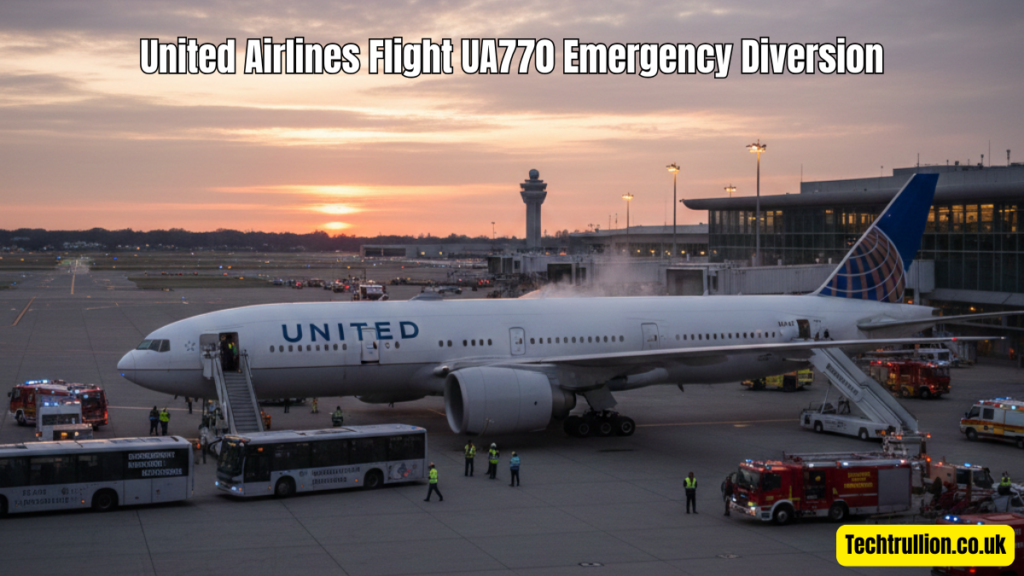

Flying can be a mix of excitement and anxiety for many passengers. On August 18, 2025, travelers on United Airlines Flight UA770 faced an unexpected situation that tested both airline protocols and passenger patience. The flight, which was originally scheduled from San Francisco to Boston, had to undergo an emergency diversion. While incidents like these are rare, they highlight the critical role of training, safety measures, and quick decision-making in commercial aviation. In this article, we’ll explore what happened, why the flight was diverted, and what passengers can learn from such experiences.
What Happened on United Airlines Flight UA770
United Airlines Flight UA770 was mid-flight over the Atlantic when the crew detected a potential safety concern. Reports later indicated that the issue was related to cabin pressure, which can affect passenger health if not addressed immediately. The flight crew, trained for such emergencies, made a swift decision to divert the plane to a safer location rather than risk continuing to the scheduled destination united airlines flight ua770 emergency diversion.
For passengers, moments like these can feel chaotic. Imagine sipping your coffee and watching the in-flight map when suddenly the captain announces a diversion. The calm and reassurance from the crew, however, is what helps everyone stay safe and composed united airlines flight ua770 emergency diversion.
Why Airlines Divert Flights
Diverting a flight is not a decision made lightly. There are several reasons why a flight may be redirected:
- Technical Malfunctions: Even minor issues, such as sensor irregularities or mechanical warnings, can prompt a precautionary landing.
- Medical Emergencies: If a passenger experiences a serious health event, the flight may divert to the nearest airport.
- Weather Conditions: Sudden storms or unsafe landing conditions at the original destination can necessitate a diversion.
- Operational Safety: Sometimes air traffic control or other aviation authorities request diversions to maintain overall safety in the skies.
In the case of United Airlines Flight UA770, the primary reason reported was a concern with cabin pressure, which is a serious matter requiring immediate attention united airlines flight ua770 emergency diversion.
The Diversion Process: How It Works
When a flight is diverted, the crew follows strict protocols to ensure safety. Here’s a glimpse into what typically happens:
- Assessment: The captain, along with the flight engineers and sometimes senior cabin crew, assess the issue.
- Communication: Pilots contact air traffic control and the airline’s operations center to discuss possible landing airports.
- Passenger Updates: Crew informs passengers, providing reassurance and clear instructions.
- Landing Preparation: Crew prepares the aircraft for a non-routine landing, including checking fuel, flight path, and emergency procedures.
- Landing and Support: Once safely on the ground, emergency services may be on standby if needed.
Passengers on UA770 were reportedly informed about the diversion clearly and calmly, which helped reduce panic and confusion.
Passenger Experiences on UA770
Travelers often share stories that provide a human angle to such events. One passenger noted that the crew’s professionalism was impressive: announcements were made frequently, water and blankets were offered, and medical personnel were ready on arrival united airlines flight ua770 emergency diversion.
Another passenger shared that despite the anxiety, seeing the crew work efficiently reassured them. People traveling with children or elderly family members often feel additional stress during diversions, but transparent communication from the airline can make a huge difference.
How Emergency Diversions Highlight Airline Safety
Incidents like the United Airlines Flight UA770 emergency diversion are not just isolated stories—they show how aviation safety works in real-time. Modern airlines invest heavily in:
- Training: Crew members undergo extensive simulations for various emergencies.
- Technology: Aircraft have redundant systems to detect anomalies early.
- Coordination: Airports, air traffic control, and emergency services are ready to respond instantly.
While passengers may see diversions as inconvenient, in reality, these decisions are proactive and designed to prevent accidents united airlines flight ua770 emergency diversion.
What Passengers Can Learn
Experiencing an emergency diversion, while unsettling, offers valuable lessons for travelers:
- Stay Calm: Crew are trained to handle emergencies; panicking only makes things harder.
- Listen Carefully: Instructions over the intercom are critical.
- Expect Delays: Safety always comes first, so flights may arrive later than planned.
- Plan for Contingencies: Keeping essential items in carry-on luggage ensures comfort if a flight lands unexpectedly.
These tips are simple but effective in making diversions less stressful.
Comparing UA770 to Past Diversions
History shows that diversions are more common than many think, though few make headlines. For example, flights have been diverted due to mechanical warnings, severe weather, or passenger health issues. Each situation, like UA770, reinforces how aviation prioritizes safety over schedules.
Unlike some past incidents, UA770’s diversion was smooth, without injuries or panic, highlighting the evolution of training and emergency preparedness in the airline industry.
Frequently Asked Questions (FAQs)
Q1: How common are emergency diversions in commercial flights?
A: While diversions do happen, they are relatively rare. Airlines plan for emergencies constantly, making the skies safer for everyone.
Q2: Will passengers get compensation for a diversion?
A: Compensation depends on airline policies and the reason for the diversion. In cases of safety-related diversions, airlines prioritize safe travel over timing.
Q3: Is it dangerous when a plane diverts?
A: Diversions are safety measures, not indicators of imminent danger. Pilots divert flights to prevent potential issues from escalating.
Q4: How do pilots choose a diversion airport?
A: The decision is based on proximity, runway suitability, weather conditions, and availability of emergency services.
Q5: Can passengers request a refund if a flight is diverted?
A: Policies vary by airline, but many airlines offer options like rebooking or partial refunds, especially for long delays caused by diversions.
Conclusion
The United Airlines Flight UA770 emergency diversion serves as a reminder that air travel is highly regulated and safety-focused. For passengers, the experience may be unnerving, but understanding the reasons behind diversions can ease anxiety. From trained crews to coordinated airport support, every step is taken to ensure passengers arrive safely, even if the route changes unexpectedly. While delays and changes are inconvenient, the primary goal is always protecting lives above all else.